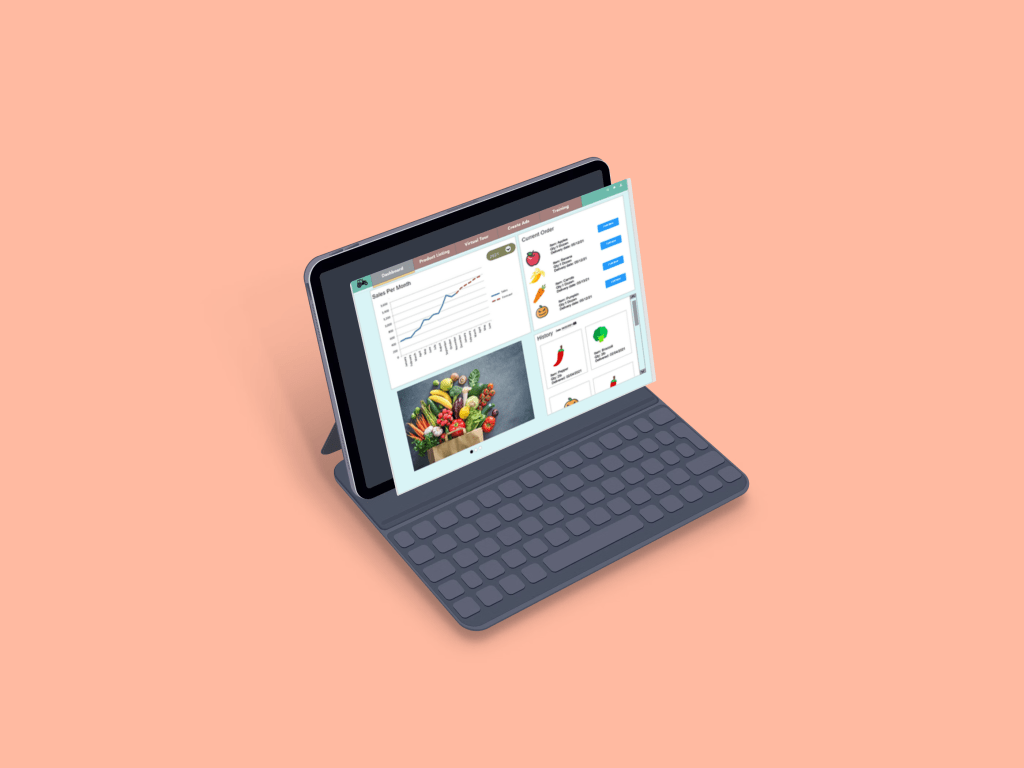
Project Overview: Empowering the Farmers Experience
Designing intuitive solutions that simplify processes, boost accessibility, and support everyday decision-making for farmers. This project focused on enhancing usability, visual clarity, and trust—bridging the gap between technology and real-world agricultural needs.
Time Frame
4 Month
My Role
UX + UI Design, Visual design, Branding, User flow, Research, Prototyping + Testing
Tools
AdobeXD, Zoom, Google Forms, Google Doc
The Challenge
Helps farmers share their harvest with a wider audience by making it easy to sell their produce online.
In today’s digital age, it’s becoming harder for farmers to directly connect with customers as more people shop for groceries online. This project introduces a user-friendly website that helps farmers sell their produce directly to consumers and local restaurants.
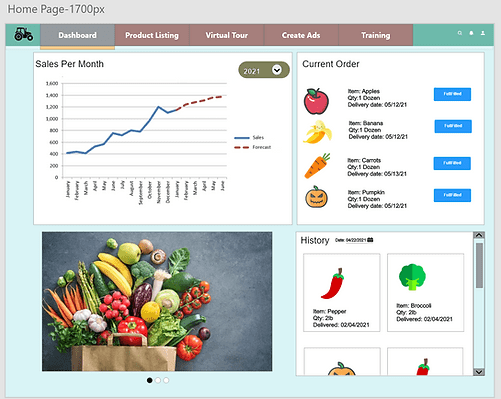
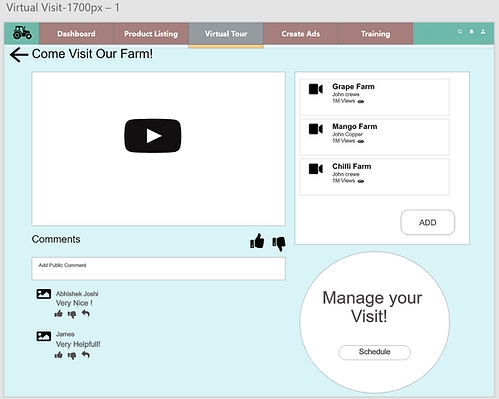
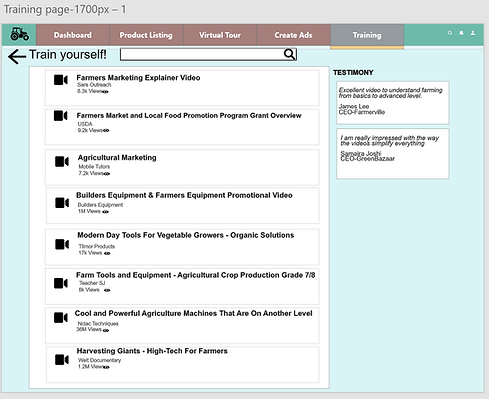
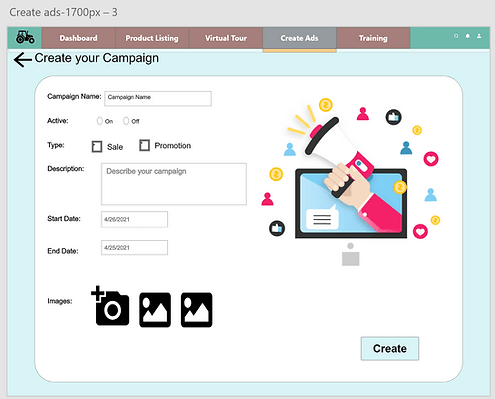
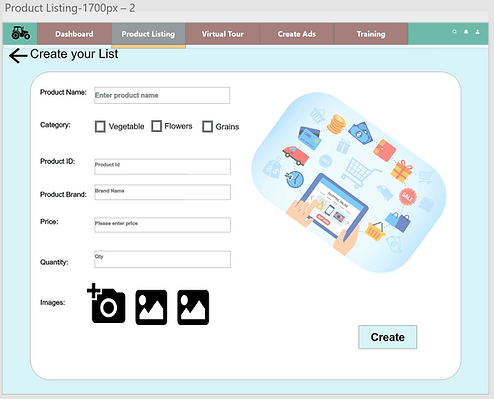
The platform includes a personalized dashboard to track sales and performance, and an easy-to-use product listing feature to showcase fresh produce. Farmers can upload virtual farm tours to build trust and engage customers visually. They can also create custom ads to promote their offerings and access marketing training videos to sharpen their promotional skills. Altogether, the platform empowers farmers with the tools and knowledge to expand their reach and grow their business online.
Objective/Goal
To empower farmers by providing a digital platform that enables them to sell their produce directly to consumers and local businesses, while offering tools for marketing, engagement, and growth—ultimately bridging the gap between traditional farming and modern e-commerce.
Research
User Interview
As part of the initial research, I conducted user interviews with five individuals—3 with a farming background and two with technical expertise—to understand how the idea of an online farmers market would be received. Their feedback provided early insights into both the practical need for such a platform and the technical expectations from users with varying experiences.
Key Question
1. Can you tell me about your experience with selling produce?
2. How do you currently sell your products?
3. Have you used any online platforms to sell or buy farm products? If yes, which ones?
4. What challenges do you face when trying to sell your produce?
5. Have there been times when your produce went unsold? What did you do then?
6. What’s the most frustrating part about selling directly to customers?
This is what I found
Challenges Farmer’s face selling offline
- Farmers are restricted to local customers or nearby markets.
- Fresh produce can spoil quickly if not sold on time.
- Sales depend on foot traffic and market days.
- No branding or direct customer communication.
- Keeping track of inventory, sales, and pricing is time-consuming.
- Traveling to markets and setting up stalls involves time, money, and effort.
Why Most Farmers Still Sell Offline
- Many farmers may not be comfortable using technology or online platforms.
- Rural areas often have poor connectivity, making it difficult to rely on digital tools.
- Selling face-to-face in local markets feels more personal and trustworthy.
- Setting up online stores requires time, effort, and learning, which can be overwhelming.
- Local customers may prefer seeing, touching, or bargaining in person.
Storyboarding
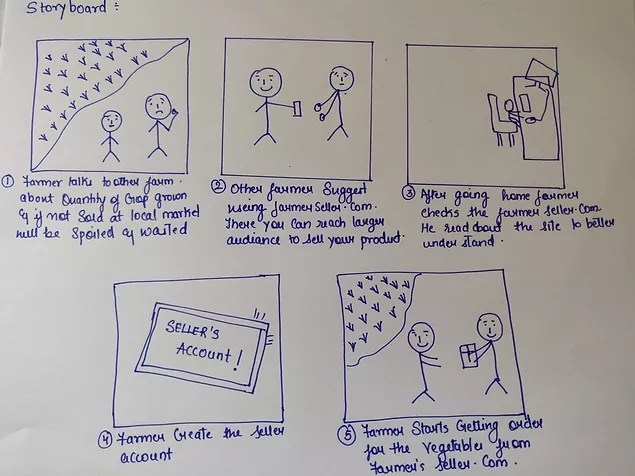
To illustrate how users interact with the system, I used a narrative storyboard. This approach helps provide context by visually mapping out the user experience over time. Each frame in the storyboard represents a specific moment or event, allowing the viewer to understand not just what happens, but how and why it happens. By showing a sequence of actions and reactions, storyboarding effectively communicates the flow of interaction, user behavior, and system response—making it easier to identify opportunities for improvement or innovation in the design.
WireFrame
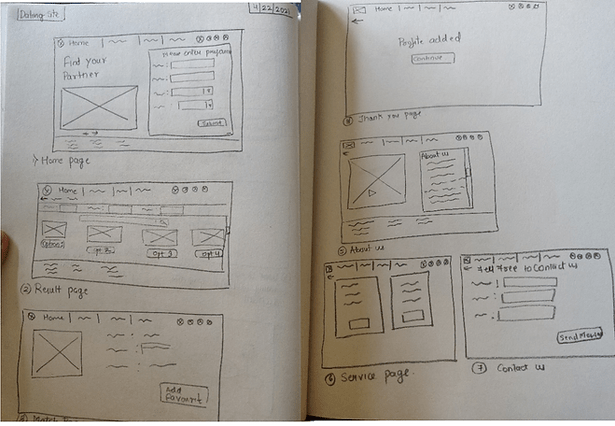
Once the solution began to take shape, I transitioned into creating sketched wireframes to visualize the structure and flow of the interface. These low-fidelity wireframes allowed me to explore layout ideas and key interactions before committing to finer visual details. After refining the wireframes, I moved on to developing a high-fidelity prototype to represent the final look and feel of the product. The next crucial step was user testing—gathering feedback to validate the design decisions and uncover areas for improvement.
High-Fidelity Prototype
After defining the concept for the Farmer’s Seller website—an online platform that enables farmers to sell vegetables and fruits in bulk—I moved forward with designing the high-fidelity prototype using Adobe XD. The design was inspired by the Amazon Seller interface, focusing on a streamlined, backend-style experience where farmers can easily list and manage their products for sale. The goal was to create a functional and user-friendly system tailored to the needs of agricultural sellers.
Usability Testing
To evaluate the Usability of the Farmer’s Seller Market website, I conducted a usability test with four participants. The two participant, aged 59 and 45, had some background in farming, while the other two participant, aged 30 and 37, were an engineer with strong technical knowledge. Their feedback offered contrasting yet valuable insights. The older participant appreciated the platform’s purpose, expressing that having an online space to sell excess produce would help reduce waste and increase income opportunities for farmers. On the other hand, the younger, more technically inclined participant focused on the platform’s scalability, potential technical challenges, and long-term growth. This usability test provided a well-rounded perspective on both the user need and the technical feasibility of the product.
User’s Feedback:
- Participants genuine interest in the concept, noting that an online platform to sell farm products would be highly beneficial for farmers like him.
- Participant’s found the website’s flow intuitive and user-friendly, and particularly appreciated the simplicity of the product listing process.
- Participant’s expressed concern about how the products would be delivered once an order is placed.
- Participant’s liked the idea of offering training videos to help farmers improve their marketing skills.
- Participant’s recommended adding a preview step on the listing page, allowing users to review their product details after clicking the ‘Create’ button and before the listing is finalized.
- Participant’s recommended including a yearly income summary on the dashboard to provide users with a clear view of their financial performance over time.
Outcome & Learning
Learning
- Learned how to use Adobe XD to design and build interactive prototypes that simulate real user interactions.
- Gained practical experience in conducting usability testing to better understand user behavior and needs.
- Improved my ability to document and summarize key findings, feedback, and design decisions throughout the project.
- Learned how to create video prototypes to effectively communicate the concept, user journey, and overall functionality of the product.
Outcome:
- Selected and interviewed end users as part of the Usability testing to gather real-world insights and feedback.
- In hindsight, conducting additional research or a survey with local farmers could have provided a deeper understanding of their daily challenges and helped shape more relevant solutions.
Future Impact
The Farmer’s Seller website has the potential to empower local farmers by providing them with direct access to online markets, reducing dependency on middlemen. It can help increase their income, reduce food waste, and promote digital literacy. Over time, this platform could play a vital role in building a more transparent, scalable, and sustainable agricultural supply chain.
 Chanchal Joshi